
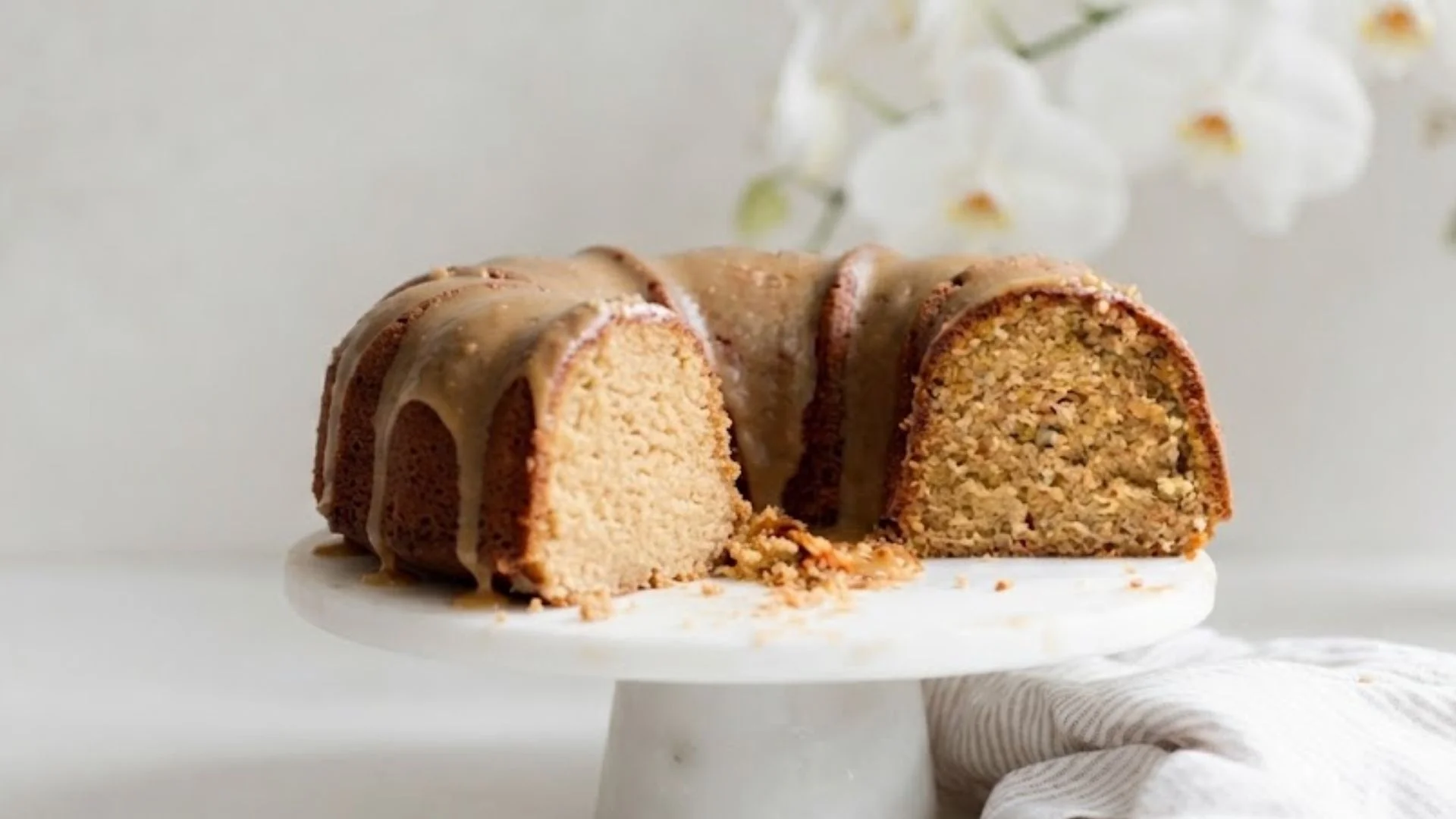
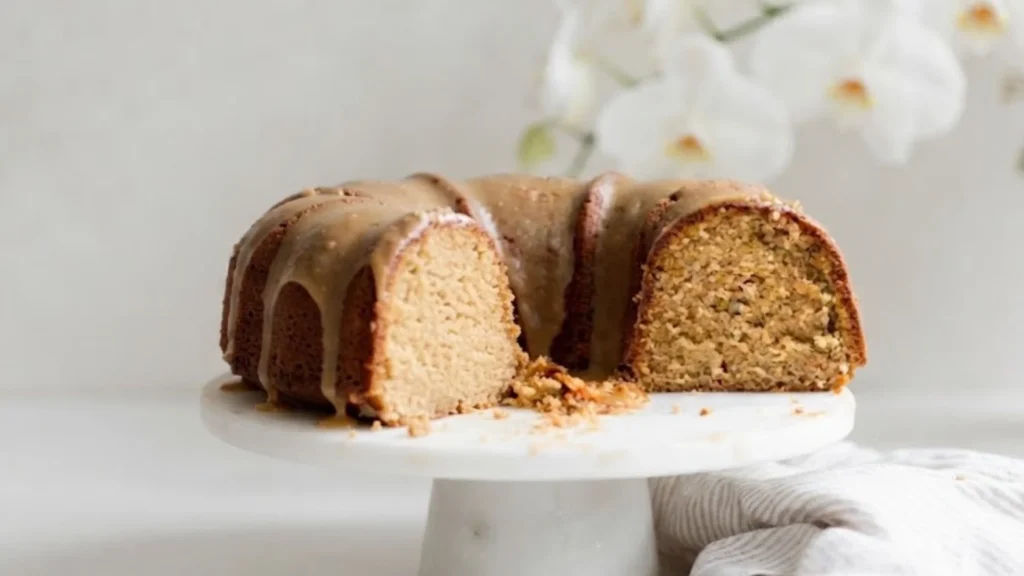
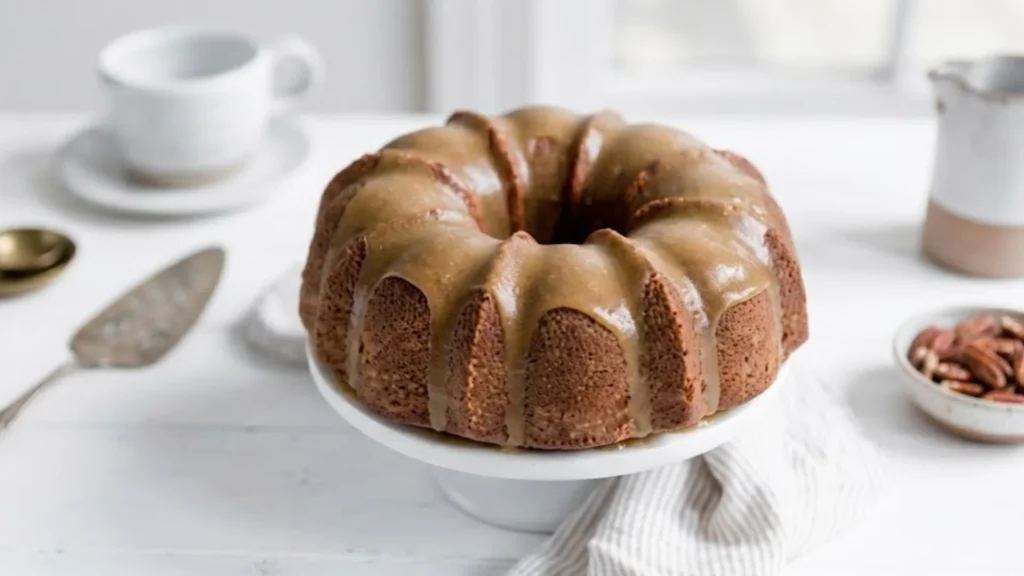
The butterscotch Bundt cake recipe is a rich, brown sugar cake with a soft crumb and a buttery glaze that settles over the ridges of the cake.
I wanted the flavor to taste like homemade butterscotch rather than just adding sweetness, so I spent some time getting the balance right.
The tricky part came near the end of baking, when the edges were ready but the center still needed more time. Once I figured that out, the cake turned out moist, tender, and full of warm caramel notes.
The glaze adds a smooth finish without making each slice feel too heavy. Here I’m sharing the little things I learned along the way.
About This Recipe
This butterscotch Bundt cake recipe gets its rich flavor from dark brown sugar, butter, and a touch of vanilla. Sour cream keeps the crumb soft and gives the cake a pleasant tenderness without making it dense.
Once baked, the butterscotch Bundt cake recipe is finished with a warm brown sugar icing that adds a smooth, buttery sweetness across the top.
The Bundt shape gives every slice plenty of golden edges and a soft center, making the butterscotch Bundt cake recipe a lovely choice for afternoon coffee, family gatherings, or a homemade dessert after dinner.
Recipe Overview
Prep Time: 25 minutes
Cook Time: 55 minutes
Cooling Time: 35 minutes
Total Time: About 1 hour 55 minutes
Course: Dessert
Difficulty: Easy
Cuisine: American
Cooking Style: Oven Baking
Recipe Type: Bundt Cake
Main Ingredient: Brown Sugar
Best Served: With coffee, tea, or a light scoop of vanilla ice cream
Yield: 12 slices
Serving Size: 1 slice
Main Kitchen Utensils
- 10- to 12-cup Bundt pan
- Large mixing bowl
- Medium bowl
- Electric hand mixer or stand mixer
- Flexible spatula
- Whisk
- Measuring cups and spoons
- Small saucepan
- Wire cooling rack
- Pastry brush
- Fine-mesh sieve
Ingredients
For the Cake
- 2¼ cups all-purpose flour, spooned and leveled
- ¾ cup unsalted butter, softened
- ½ cup granulated sugar
- ¾ cup packed dark brown sugar
- 1½ teaspoons baking powder
- ½ teaspoon baking soda
- ¼ teaspoon kosher salt
- 3 large eggs, room temperature
- ¾ cup full-fat sour cream, room temperature
- 1½ teaspoons vanilla extract
For the Butterscotch Icing
- ¼ cup heavy cream
- 3 tablespoons unsalted butter
- ⅓ cup packed light brown sugar
- ⅓ cup powdered sugar, sifted
- ⅛ teaspoon fine sea salt
How to Make Butterscotch Bundt Cake Recipe
1. Prepare the Bundt pan.
Set the oven to 350°F and place a rack in the center. Brush the inside of a 10- to 12-cup Bundt pan thoroughly with softened butter, making sure to reach the grooves and center tube. Dust it lightly with flour, then tap out the excess.
2. Combine the dry ingredients.
Add the flour, baking powder, baking soda, and kosher salt to a bowl. Whisk them together for several seconds so the leavening is evenly distributed.
3. Cream the butter and sugars.
Beat the softened butter with the granulated sugar and dark brown sugar until the mixture looks lighter and creamy, about 3–4 minutes. Scrape the sides of the bowl once or twice so no butter remains underneath the mixture.
4. Add the eggs.
Beat in the eggs one at a time. Allow each egg to blend into the batter before adding the next. Mix in the vanilla after the final egg.
5. Add the sour cream and flour mixture.
Add the sour cream and about one-third of the dry mixture. Mix on low speed just until incorporated. Continue with another portion of flour, followed by the remaining sour cream and dry ingredients. Stop as soon as the batter looks even; prolonged mixing can make the crumb firmer.
6. Fill the Bundt pan.
Spoon the batter into the prepared pan. Use a spatula to push the mixture gently into the deeper grooves, then smooth the surface. Give the pan a light tap on the counter to settle any large air pockets.
7. Bake the cake.
Bake for 50–55 minutes, or until a wooden skewer inserted near the thickest part comes out with a few moist crumbs attached. Avoid waiting for the tester to become completely dry, as that can mean the cake has gone too far.
8. Cool before removing.
Leave the cake in the pan for about 15 minutes. Run a thin spatula carefully around the outer edge if needed, then turn the cake onto a wire rack. Allow it to cool fully before adding the icing.
9. Cook the butterscotch icing.
Place the butter, heavy cream, light brown sugar, and sea salt in a small saucepan. Warm over medium-low heat, stirring until the butter melts and the sugar begins to dissolve. Let the mixture bubble gently for about 2 minutes, then remove it from the heat. Whisk in the sifted powdered sugar until smooth.
10. Finish the cake.
Let the icing sit for several minutes until it becomes slightly thicker but still pours easily. Drizzle it over the cooled Bundt cake, allowing some of it to follow the natural ridges down the sides. Let the topping settle before slicing.
Nutrition Facts Of Butterscotch Bundt Cake Recipe
| Nutrition | Amount |
|---|---|
| Calories | 430 kcal |
| Carbohydrates | 57 grams |
| Protein | 5 grams |
| Fat | 21 grams |
| Saturated Fat | 13 grams |
| Cholesterol | 0.086 grams |
| Sodium | 0.25 grams |
| Sugar | 34 grams |
| Fiber | 1 gram |
Why You’ll Love This Butterscotch Bundt Cake
This butterscotch Bundt cake recipe has the kind of homemade flavor that makes a simple afternoon feel a little special. The crumb is delicate enough to cut cleanly but still has a pleasant softness when you take a forkful.
I also like that the Bundt pan gives the finished cake an attractive shape without requiring much decoration. The butterscotch topping adds just enough sweetness to make the cake feel complete.
The butterscotch Bundt cake recipe works nicely for a weekend bake, a family dessert, or a quiet coffee break when you want something made from scratch.
My Tips for the Best Results
1. Coat the entire inside of the pan, including the center tube and small grooves. A missed spot can make an otherwise good cake difficult to release.
2. The butter should be soft enough to beat easily but still hold its shape. Melted butter can change how the batter comes together.
3. Mix in one egg at a time and scrape the bowl between additions. This keeps the mixture smooth and prevents pockets of unmixed batter.
4. Spoon flour into the measuring cup and level the top with a knife. Avoid pressing it down, since extra flour can affect the final crumb.
5. Start checking near the end of the suggested baking time. Insert a wooden skewer into the thickest section; a few moist crumbs are fine, but wet batter needs longer.
6. Let it rest in the pan before turning it onto the rack. Removing it immediately can cause the delicate edges to break.
7. Let the topping cool slightly after cooking. It should flow slowly from a spoon rather than run like a thin liquid, which helps it stay on the cake.
What to Serve With Butterscotch Bundt Cake
A warm cup of coffee is an easy match for a slice of this butterscotch Bundt cake recipe, especially for an afternoon treat. Black tea or a lightly sweetened latte also works well alongside the brown sugar flavor.
For dessert, add a small scoop of vanilla ice cream or a spoonful of softly whipped cream. Fresh strawberries, raspberries, or sliced apples can bring a little freshness to the plate.
If you are serving the cake after dinner, a drizzle of warm caramel sauce makes the serving feel a bit more special without needing any extra decoration.
Seasonal Serving Ideas
➤ Spring: Serve thin slices with fresh strawberries or raspberries and a little whipped cream. The fruit adds a fresh touch to the rich brown sugar and butterscotch flavors.
➤ Summer: Pair the cake with fresh berries and a scoop of vanilla ice cream. Keep the slices slightly smaller if serving it after a summer meal.
➤ Fall: Add a spoonful of warm apple compote or serve it with sliced apples and a little cinnamon. The apple and brown sugar flavors work especially well together.
➤ Winter: Serve it slightly warm with a drizzle of extra butterscotch sauce and a cup of coffee or hot tea. It makes a cozy dessert for holiday gatherings and cold evenings.
Variations
1. Brown Butter Butterscotch Cake
Use ¾ cup unsalted butter as usual, but brown it in a saucepan until it develops a toasted, nutty scent. Cool it until slightly warm before mixing it into the batter. The browned butter gives the cake a deeper flavor.
2. Coffee Butterscotch Bundt Cake
Dissolve 1½ teaspoons instant espresso powder in the sour cream before adding it to the batter. The coffee flavor stays mild while adding extra depth to the brown sugar base.
3. Butterscotch Cream Cheese Icing
For a richer topping, beat together 4 ounces softened cream cheese, 1 cup powdered sugar, 2 tablespoons heavy cream, and ½ teaspoon vanilla extract. Spread or drizzle it over the completely cooled cake.
4. Butterscotch Pudding Bundt Cake
Add 1 small box (3.4 ounces) instant butterscotch pudding mix to the dry ingredients. Keep the remaining cake ingredients unchanged and mix until the batter is evenly combined.
5. Double Butterscotch Bundt Cake
Fold ¾ cup butterscotch baking chips into the finished batter just before transferring it to the pan. For an even stronger finish, stir ½ teaspoon butterscotch extract into the icing.
Storage And Shelf Life
This butterscotch Bundt cake recipe stays soft for about 3 days when stored in a covered container at room temperature. Keep the cake away from direct heat or sunlight so the icing remains in good shape.
For a longer hold, wrap the cake tightly in plastic wrap, place it in a freezer-safe container, and freeze for up to 2 months. Thaw individual slices at room temperature before serving.
If the icing looks a little dull after freezing, a fresh drizzle of butterscotch icing can bring back its finished look.
Frequently Asked Questions
Can I use light brown sugar instead of dark brown sugar?
Yes. Light brown sugar works well, but the finished Butterscotch Bundt Cake will have a slightly lighter color and a gentler molasses flavor.
Can I replace sour cream with Greek yogurt?
Yes. Use the same amount of full-fat plain Greek yogurt. It provides a similar richness and helps maintain a tender crumb.
Why did my Bundt cake crack on top?
A small crack is normal with Bundt cakes because the batter rises and expands as it bakes. A deeper split can happen when the oven temperature is too high or the batter is overmixed.
How do I know when the Bundt cake is fully baked?
Insert a wooden skewer into the thickest part of the cake. It should come out with a few moist crumbs attached rather than wet batter. The cake should also spring back gently when pressed.
Can I make the butterscotch icing ahead of time?
Yes. Prepare it a few hours ahead and keep it covered. Before using, let it soften slightly and stir well so it reaches a smooth drizzling consistency.
Final Thoughts
This butterscotch Bundt cake recipe has become one of those bakes I’m happy to make when I want something homemade without spending hours decorating.
The brown sugar flavor gives the cake plenty of character, while the butterscotch finish makes each slice feel a little more special. After working through the small baking details, I was really pleased with how it turned out.
If you enjoy old-fashioned brown sugar desserts, this is one I’d gladly make again for family, friends, or a relaxed afternoon at home.
More Homemade Favorites
Southern-Style Rice Dressing Recipe
Popular Amish Carrot Cake Recipe
Sweet Chili BBQ Sauce Recipe – Sweet, Tangy & Spicy
Skillet Apple Crisp Recipe (Easy Dessert)
Old-Fashioned Wacky Vanilla Cake Recipe
Butterscotch Bundt Cake Recipe

Equipment
- 10- to 12-cup Bundt pan
- Large mixing bowl
- Medium bowl
- Electric hand mixer or stand mixer
- Flexible spatula
- Whisk
- Measuring cups and spoons
- Small saucepan
- Wire cooling rack
- Pastry brush
- Fine mesh sieve
Ingredients
For the Cake
- 2¼ cups all-purpose flour spooned and leveled
- ¾ cup unsalted butter softened
- ½ cup granulated sugar
- ¾ cup packed dark brown sugar
- 1½ teaspoons baking powder
- ½ teaspoon baking soda
- ¼ teaspoon kosher salt
- 3 large eggs room temperature
- ¾ cup full-fat sour cream room temperature
- 1½ teaspoons vanilla extract
For the Butterscotch Icing
- ¼ cup heavy cream
- 3 tablespoons unsalted butter
- ⅓ cup packed light brown sugar
- ⅓ cup powdered sugar sifted
- ⅛ teaspoon fine sea salt
Instructions
Prepare the Bundt pan.
- Set the oven to 350°F and place a rack in the center. Brush the inside of a 10- to 12-cup Bundt pan thoroughly with softened butter, making sure to reach the grooves and center tube. Dust it lightly with flour, then tap out the excess.
Combine the dry ingredients.
- Add the flour, baking powder, baking soda, and kosher salt to a bowl. Whisk them together for several seconds so the leavening is evenly distributed.
Cream the butter and sugars.
- Beat the softened butter with the granulated sugar and dark brown sugar until the mixture looks lighter and creamy, about 3–4 minutes. Scrape the sides of the bowl once or twice so no butter remains underneath the mixture.
Add the eggs.
- Beat in the eggs one at a time. Allow each egg to blend into the batter before adding the next. Mix in the vanilla after the final egg.
Add the sour cream and flour mixture.
- Add the sour cream and about one-third of the dry mixture. Mix on low speed just until incorporated. Continue with another portion of flour, followed by the remaining sour cream and dry ingredients. Stop as soon as the batter looks even; prolonged mixing can make the crumb firmer.
Fill the Bundt pan.
- Spoon the batter into the prepared pan. Use a spatula to push the mixture gently into the deeper grooves, then smooth the surface. Give the pan a light tap on the counter to settle any large air pockets.
Bake the cake.
- Bake for 50–55 minutes, or until a wooden skewer inserted near the thickest part comes out with a few moist crumbs attached. Avoid waiting for the tester to become completely dry, as that can mean the cake has gone too far.
Cool before removing.
- Leave the cake in the pan for about 15 minutes. Run a thin spatula carefully around the outer edge if needed, then turn the cake onto a wire rack. Allow it to cool fully before adding the icing.
Cook the butterscotch icing.
- Place the butter, heavy cream, light brown sugar, and sea salt in a small saucepan. Warm over medium-low heat, stirring until the butter melts and the sugar begins to dissolve. Let the mixture bubble gently for about 2 minutes, then remove it from the heat. Whisk in the sifted powdered sugar until smooth.
Finish the cake.
- Let the icing sit for several minutes until it becomes slightly thicker but still pours easily. Drizzle it over the cooled Bundt cake, allowing some of it to follow the natural ridges down the sides. Let the topping settle before slicing.
Notes
Nutrition Facts Of Butterscotch Bundt Cake Recipe
Calories: 430 kcal | Carbohydrates: 57 grams | Protein: 5 grams | Fat: 21 grams | Saturated Fat: 13 grams | Cholesterol: 0.086 grams | Sodium: 0.25 grams | Sugar: 34 grams | Fiber: 1 gramWelcome! I’m Lipia, but my friends call me Koley, and you can, too! I’m a professionally trained recipe creator. Baking, cooking, writing, and teaching are my greatest passions, and I love sharing practical techniques that make every recipe easier to prepare.
My home in Bellville, Texas. I spend my days creating, testing, and refining dishes that bring people together around the table. My goal is to inspire confidence in the kitchen and help you enjoy homemade meals and desserts every day.