

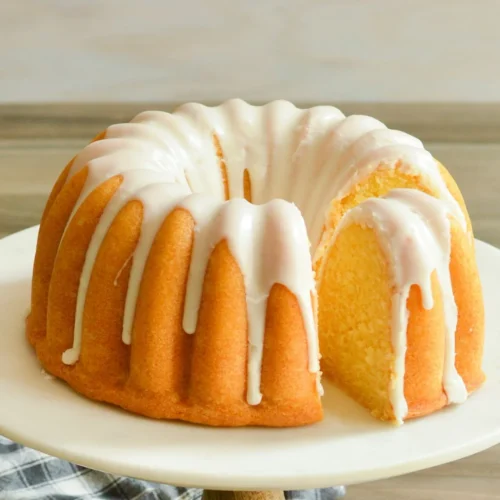
Buttermilk vanilla pound cake has a rich buttery taste, a soft, tender crumb, and just the right amount of vanilla sweetness. The golden crust and light glaze make it look so tempting beside a cup of coffee or tea.
I noticed that using room-temperature butter, eggs, and buttermilk helped everything mix together smoothly. I also learned that overmixing can make the cake heavy, so I mixed the batter only until everything was combined.
Measuring the flour carefully is important because too much can make the cake dense. The little almond extract is my favorite part because it adds a lovely extra touch to the vanilla flavor.
About This Recipe
This classic baked buttermilk vanilla pound cake has a tender center, a lightly browned exterior, and a delicate sweetness. Buttermilk keeps the crumb moist, while butter provides richness and eggs give the loaf a sturdy structure.
Vanilla and almond extracts create a warm bakery-style taste, and the brown-sugar glaze adds a thin, sweet finish. I recommend making this buttermilk vanilla pound cake when I want something homemade using familiar cupboard staples.
One issue can arise if the batter is mixed too long, causing a heavy crumb. Mixing only until the ingredients are incorporated helps preserve the soft interior and gives the finished cake a pleasing texture.
Recipe Overview
Preparation Time: 25 minutes
Cooking Time: 65 minutes
Total Time: 1 hour 20 minutes–1 hour 30 minutes
Course: Dessert
Cuisine: American
Cooking Style: Oven-baked
Recipe Type: Pound Cake
Main Ingredient: Buttermilk
Best Served: Afternoon tea, coffee, brunch, or dessert
Recipe Yield: 12 slices
Serving Size: 1 slice, about 105 g
Seasonal Ideas: Serve it plain in spring, add fresh berries in summer, pair it with warm apple compote in fall, or drizzle extra glaze during winter gatherings.
Main Kitchen Utensils
- 10-inch Bundt pan
- Stand mixer or electric hand mixer
- Large mixing bowl
- Medium bowl
- Measuring cups and spoons
- Rubber spatula
- Wire cooling rack
- Small saucepan
- Fine-mesh sieve
- Wooden skewer or cake tester

Ingredients
For the Cake
- 3 1/4 cups all-purpose flour
- 1 1/3 cups unsalted butter, softened
- 1 cup buttermilk
- 2 1/4 cups granulated sugar
- 4 large eggs, room temperature
- 1 1/2 teaspoons vanilla extract
- 1/2 teaspoon fine salt
- 3/4 teaspoon baking soda
- 1 teaspoon almond extract
For the Glaze
- 6 tablespoons unsalted butter
- 3 tablespoons packed light brown sugar
- 1 teaspoon vanilla extract
- 2 1/2 tablespoons buttermilk
- 1 3/4 cups confectioners’ sugar, sifted after measuring
Instructions
1. Prepare the Pan
Heat the oven to 325°F (165°C). Grease a 10-inch Bundt pan thoroughly, paying attention to the grooves. Dust it lightly with flour, then tap out the excess.
2. Cream the Butter and Sugar
Place the softened butter and granulated sugar in a large bowl. Beat for about 4–5 minutes until the mixture becomes noticeably lighter and fluffy. Scrape the bowl once or twice so the mixture stays even.
3. Add the Eggs
Add the eggs one at a time, mixing well after every addition. Stir in the vanilla extract and almond extract. If the mixture looks slightly curdled, continue normally; it should come together once the dry ingredients are incorporated.
4. Mix the Dry Ingredients
Whisk the flour, baking soda, and salt in a separate bowl. Add about one-third of this mixture to the batter and mix briefly. Pour in half of the buttermilk and blend gently. Continue alternating until the flour mixture and liquid are incorporated. Avoid prolonged mixing.
5. Fill the Bundt Pan
Transfer the batter into the prepared pan. Spread it evenly and gently tap the pan against the counter once or twice to remove large air pockets. Smooth the surface before baking.
6. Bake the Cake
Place the pan on the center oven rack. Bake for approximately 55–65 minutes. Begin checking around 55 minutes. A wooden skewer inserted near the thickest section should come out clean or with a few moist crumbs. The top should look golden, and the cake should spring back lightly when pressed.
7. Cool and Prepare the Glaze
Allow the cake to rest in the pan for 10–15 minutes, then carefully turn it onto a cooling rack. For the glaze, melt the butter in a small saucepan over low heat. Add brown sugar and buttermilk, stirring until the sugar dissolves. Remove from the heat, stir in vanilla, then gradually whisk in the sifted confectioners’ sugar until smooth.
8. Glaze and Serve
Let the cake cool until just warm rather than hot. Slowly spoon the glaze over the top, allowing some to run down the sides. Leave it for about 10 minutes so the topping can set slightly, then slice and serve.
Nutrition Facts Of Buttermilk Vanilla Pound Cake
| Calories | 475 kcal |
| Carbohydrates | 68 grams |
| Sugar | 47 grams |
| Protein | 5 grams |
| Total Fat | 22 grams |
| Saturated Fat | 13 grams |
| Cholesterol | 0.11 grams |
| Sodium | 0.23 grams |
| Fiber | 1 gram |
What Makes It Special
This buttermilk vanilla pound cake stands out because the buttermilk gives the crumb a moist, tender quality while butter brings a deep richness. Vanilla extract adds a familiar sweetness, and almond extract creates a subtle bakery-style note that lingers after tasting.
The brown-sugar glaze brings another layer of sweetness and gives the surface a glossy finish. I also like the contrast between the lightly crisp outer edges and the soft center.
The Bundt shape makes the finished cake look elegant after slicing. One detail I watch closely is the batter consistency, since too much flour can make the crumb heavy and dry.
Professional Baking Tips
1. Spoon flour into the measuring cup and level the top instead of scooping directly from the container. Extra flour can make the crumb heavy.
2. Let butter reach a cool room temperature. It should press easily but still hold its shape.
3. Use room-temperature eggs and buttermilk so the batter blends evenly and develops a smooth consistency.
4. Beat the butter and sugar until noticeably pale and airy. This helps create a lighter interior.
5. Add the dry ingredients in portions and stop mixing as soon as no visible flour remains. Excess stirring can produce a firm texture.
6. Grease every groove and corner before adding the batter. This helps the baked cake release cleanly.
7. Insert a wooden skewer into the thickest area. A few moist crumbs are fine, but wet batter means more oven time is needed.
Serving Suggestions
I enjoy serving a generous slice of buttermilk vanilla pound cake alongside fresh strawberries, blueberries, peaches, or thinly sliced apples. The fruit adds a fresh contrast to the rich cake and sweet glaze.
For a morning serving, coffee, black tea, or chilled milk pairs nicely beside the slice. At dessert time, a small spoonful of whipped cream can add a creamy finish.
I also like adding a few toasted almond pieces over the top for extra texture. If the cake has been stored, warming a slice briefly can soften the crumb and bring back some of the freshly baked character.
Health Benefits
This buttermilk vanilla pound cake is primarily a dessert, so I enjoy it as an occasional sweet rather than a major source of nutrition. Eggs provide protein and several essential nutrients, while buttermilk contributes calcium and protein to the recipe.
Butter supplies fat-soluble vitamins in small amounts, and flour provides carbohydrates that supply energy. Using reasonable portion sizes helps keep the dessert balanced.
Fresh berries or sliced fruit served beside the cake can add fiber, vitamin C, and antioxidants to the plate. For a lighter serving, I can use a thinner layer of glaze while still keeping the cake enjoyable.
Is It Safe For Heart Patients?
Buttermilk vanilla pound cake is not an ideal everyday dessert for people managing heart health because it contains substantial butter, sugar, and saturated fat.
A small portion may fit into some eating plans, depending on individual dietary needs. People with heart disease should consider their overall diet and follow advice from their healthcare professional.
Is It Safe For Diabetic Patients?
This buttermilk vanilla pound cake contains a significant amount of added sugar and refined carbohydrates, so it can raise blood glucose levels. A small serving may be possible for some people with diabetes, but portion size matters.
Choosing a smaller slice and pairing it with a lower-sugar meal may help manage the carbohydrate load. Individual recommendations should come from a doctor or registered dietitian.
How To Store Leftovers
Allow the buttermilk vanilla pound cake to cool completely before storing it. Place leftover slices in an airtight container and keep them at room temperature for up to 3 days.
For longer storage, refrigerate the buttermilk vanilla pound cake in a tightly sealed container for up to 5 days. You can also freeze individual slices for up to 2 months.
Wrap every slice securely before placing it in a freezer-safe container. Bring refrigerated slices to room temperature before serving for a softer texture.
FAQs on Buttermilk Vanilla Pound Cake
Can I use regular milk instead of buttermilk?
Yes. Regular milk can work, although buttermilk gives the cake a slightly tangy taste and moist crumb. For a closer substitute, stir a little lemon juice into milk and let it stand briefly before using.
Why did my pound cake stick to the Bundt pan?
Bundt pans have many grooves that can trap baked batter. Grease the pan carefully, including the center tube, then dust it lightly with flour before adding the batter.
How do I know when the cake is fully baked?
Insert a wooden skewer into the thickest part of the cake. It should come out clean or have a few moist crumbs attached. A wet skewer means the cake needs additional baking time.
Can I leave out the almond extract?
Yes. You can omit almond extract and keep the vanilla amount unchanged. The finished cake will have a more pronounced vanilla taste.
Why is my glaze too thick?
Add a small amount of buttermilk, about ½ teaspoon at a time, while whisking. Stop once the glaze reaches a pourable consistency.
Conclusion
This buttermilk vanilla pound cake brings together a tender crumb, buttery richness, gentle vanilla notes, and a sweet brown sugar glaze.
I enjoyed preparing this buttermilk vanilla pound cake because the batter came together easily, baked into a beautiful golden dessert, and finished beautifully after glazing.
I hope this buttermilk vanilla pound cake encourages you to bake a homemade cake and share a slice at your table. After trying it, please leave your rating and tell me how your cake turned out in the comments.
Your feedback helps me improve future recipes. Visit my collection to discover more related cake recipes, homemade desserts, and sweet baking ideas.
Find Your Next Favorite Recipe
Bisquick Vanilla Cake Recipes (Easy, Soft & Buttery)
Mexican Vanilla Cake Recipe | Simple & Delicious
Vanilla Cake With Strawberry Filling From Scratch
Best Vanilla Snack Cake Recipe
Moist Strawberry Vanilla Cake Recipe
Buttermilk Vanilla Pound Cake
Equipment
- 10-inch Bundt pan
- Stand mixer or electric hand mixer
- Large mixing bowl
- Medium bowl
- Measuring cups and spoons
- Rubber spatula
- Wire cooling rack
- Small saucepan
- Fine mesh sieve
- Wooden skewer or cake tester
Ingredients
For the Cake
- 3 1/4 cups all-purpose flour
- 1 1/3 cups unsalted butter softened
- 1 cup buttermilk
- 2 1/4 cups granulated sugar
- 4 large eggs room temperature
- 1 1/2 teaspoons vanilla extract
- 1/2 teaspoon fine salt
- 3/4 teaspoon baking soda
- 1 teaspoon almond extract
For the Glaze
- 6 tablespoons unsalted butter
- 3 tablespoons packed light brown sugar
- 1 teaspoon vanilla extract
- 2 1/2 tablespoons buttermilk
Instructions
Prepare the Pan
- Heat the oven to 325°F (165°C). Grease a 10-inch Bundt pan thoroughly, paying attention to the grooves. Dust it lightly with flour, then tap out the excess.
Cream the Butter and Sugar
- Place the softened butter and granulated sugar in a large bowl. Beat for about 4–5 minutes until the mixture becomes noticeably lighter and fluffy. Scrape the bowl once or twice so the mixture stays even.
Add the Eggs
- Add the eggs one at a time, mixing well after every addition. Stir in the vanilla extract and almond extract. If the mixture looks slightly curdled, continue normally; it should come together once the dry ingredients are incorporated.
Mix the Dry Ingredients
- Whisk the flour, baking soda, and salt in a separate bowl. Add about one-third of this mixture to the batter and mix briefly. Pour in half of the buttermilk and blend gently. Continue alternating until the flour mixture and liquid are incorporated. Avoid prolonged mixing.
Fill the Bundt Pan
- Transfer the batter into the prepared pan. Spread it evenly and gently tap the pan against the counter once or twice to remove large air pockets. Smooth the surface before baking.
Bake the Cake
- Place the pan on the center oven rack. Bake for approximately 55–65 minutes. Begin checking around 55 minutes. A wooden skewer inserted near the thickest section should come out clean or with a few moist crumbs. The top should look golden, and the cake should spring back lightly when pressed.
Cool and Prepare the Glaze
- Allow the cake to rest in the pan for 10–15 minutes, then carefully turn it onto a cooling rack. For the glaze, melt the butter in a small saucepan over low heat. Add brown sugar and buttermilk, stirring until the sugar dissolves. Remove from the heat, stir in vanilla, then gradually whisk in the sifted confectioners’ sugar until smooth.
Glaze and Serve
- Let the cake cool until just warm rather than hot. Slowly spoon the glaze over the top, allowing some to run down the sides. Leave it for about 10 minutes so the topping can set slightly, then slice and serve.
Notes
Nutrition Facts Of Buttermilk Vanilla Pound Cake
Calories: 475 kcal | Carbohydrates: 68 grams | Sugar: 47 grams | Protein: 5 grams | Total Fat: 22 grams | Saturated Fat: 13 grams | Cholesterol: 0.11 grams | Sodium: 0.23 grams | Fiber: 1 gramWelcome! I’m Lipia, but my friends call me Koley, and you can, too! I’m a professionally trained recipe creator. Baking, cooking, writing, and teaching are my greatest passions, and I love sharing practical techniques that make every recipe easier to prepare.
My home in Bellville, Texas. I spend my days creating, testing, and refining dishes that bring people together around the table. My goal is to inspire confidence in the kitchen and help you enjoy homemade meals and desserts every day.