
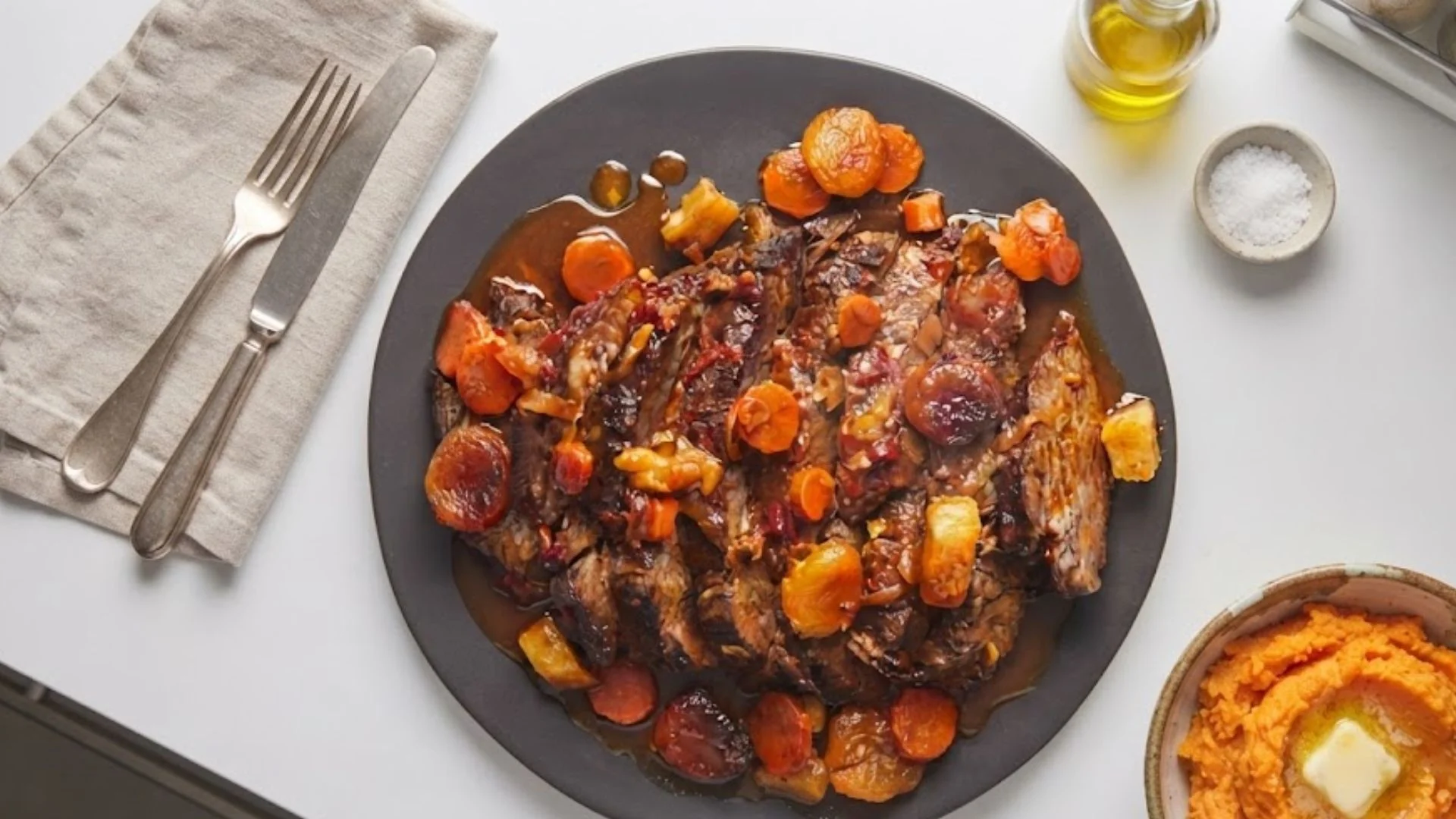
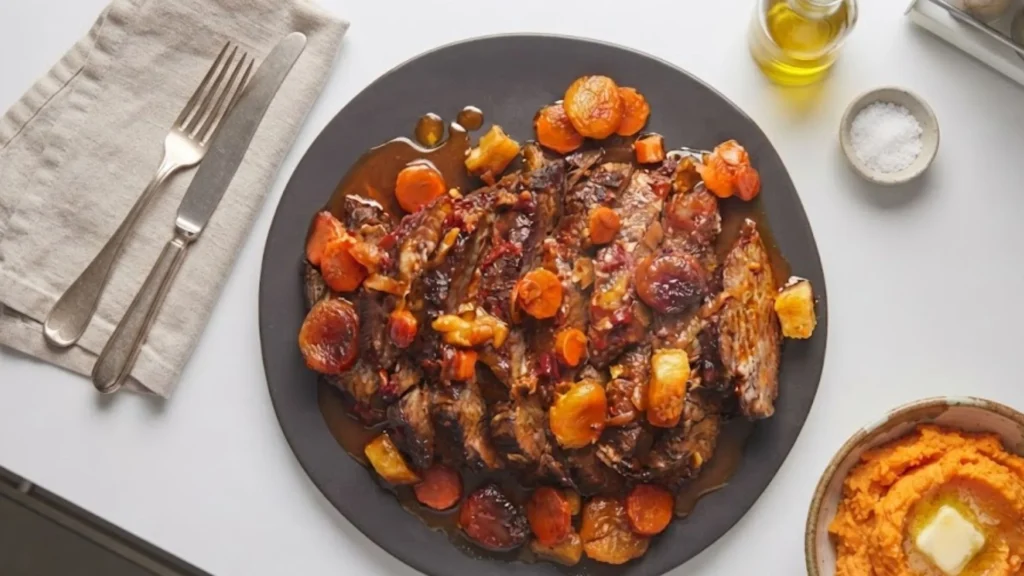
The best part of a Delmonico Roast recipe is the tender beef and the savory juices left in the pan. I wanted to share this version after testing it several times and paying close attention to how the meat changed in the oven.
One batch was still chewy when the timer went off, so I gave it more covered cooking time rather than rushing it. That extra time made a noticeable difference; the beef became much softer, and the vegetables nearly melted into the sauce.
It takes a few hours, but most of that time is hands-off, making it a great choice for a relaxed Sunday dinner.
About This Delmonico Roast Recipe
This Delmonico roast recipe has a hearty homemade character that comes from a few well-matched ingredients. The red wine brings a slight fruity depth, while tomato paste gives the cooking liquid a fuller taste.
Carrot and celery add a mild sweetness as they cook down around the beef. Garlic and thyme keep the flavor savory without making it too sharp.
I prefer serving the meat in slices with some of the soft vegetables and spoonfuls of the pan liquid on top. The result feels rustic, filling, and well suited to a generous family-style meal.
Recipe Overview
Prep Time: 20 minutes
Cook Time: 3 hours 15 minutes
Total Time: 3 hours 35 minutes
Course: Main Course
Difficulty: Easy
Cuisine: American
Cooking Style: Slow Roasting
Recipe Type: Beef Roast
Main Ingredient: Delmonico Roast
Best Served: With mashed potatoes, roasted vegetables, or crusty bread
Recipe Yield: 8 servings
Published Serving: 8 servings
Serving Size: About 5–6 ounces cooked beef with sauce
Main Kitchen Utensils
- Large Dutch oven or heavy oven-safe pot
- Large cutting board
- Sharp chef’s knife
- Measuring spoons and cups
- Wooden spoon
- Tongs
- Small bowl
- Instant-read meat thermometer
- Serving platter
Ingredients
- 1 Delmonico roast or second-cut brisket, about 3½ pounds
- ⅔ cup dry red wine
- 1¼ teaspoons freshly ground black pepper
- ¾ teaspoon garlic powder
- 1 large yellow onion, roughly chopped
- 7 fresh garlic cloves, thinly sliced
- ¾ teaspoon dried thyme
- 1¼ tablespoons paprika
- 2½ tablespoons tomato paste
- 1 large carrot, cut into small cubes
- 1 large celery stalk, diced
- 1¼ tablespoons kosher salt
- 2 tablespoons olive oil
- ½ cup beef broth
Instructions
1. Bring the beef to room temperature.
Take the roast out of the refrigerator and leave it on the counter for about 25–30 minutes. Pat it dry with paper towels. Removing the surface moisture helps the beef develop a deeper brown crust in the pot.
2. Season the roast.
Mix the kosher salt, black pepper, garlic powder, and paprika in a small bowl. Rub the seasoning all over the roast, making sure to cover the sides as well as the top and bottom.
3. Brown the roast.
Warm the olive oil in a Dutch oven over medium-high heat. Once the oil is hot, add the beef and let each large side brown for several minutes before turning. Use tongs to move the roast so the juices stay inside.
4. Soften the vegetables.
Place the browned roast on a plate for a moment. Add the onion, carrot, and celery to the same Dutch oven. Cook them for about 4 minutes, stirring now and then. Add the sliced garlic and cook for another 30–45 seconds, just until it becomes fragrant.
5. Cook the tomato paste.
Stir the tomato paste through the vegetables and let it cook for about 1 minute. I find this quick step makes a noticeable difference in the finished gravy because the paste loses its raw taste and blends better with the beef juices.
6. Pour in the wine.
Add the red wine to the pot. Scrape the bottom with a wooden spoon as the wine bubbles so the browned bits loosen into the liquid. Let it simmer for about 2 minutes.
7. Add broth and thyme.
Pour in the beef broth and add the dried thyme. The liquid should reach partway up the roast. There is no need to completely submerge the beef because the covered Dutch oven will keep the cooking environment moist.
8. Roast until tender.
Put the roast back into the Dutch oven and cover it tightly with the lid. Place the pot in a preheated 325°F (165°C) oven. Roast for about 2½ to 3¼ hours. Start checking the beef near the end of this range since the exact time can vary with the size and shape of the roast.
9. Test the beef.
Check the thickest part of the roast with an instant-read thermometer. More importantly, the beef should feel tender when tested. If it still feels firm, cover the pot again and cook for another 20–30 minutes before checking it again.
10. Rest and serve.
Move the roast to a cutting board and let it rest for about 15 minutes. Slice it against the grain for more tender pieces. Spoon the soft vegetables and some of the flavorful pan liquid over the slices just before serving.
Nutrition Facts of Delmonico Roast Recipe
| Nutrition | Amount |
|---|---|
| Calories | 410 calories |
| Protein | 43 grams |
| Fat | 23 grams |
| Carbohydrates | 7 grams |
| Fiber | 1.5 grams |
| Sugar | 3 grams |
| Cholesterol | 125 grams |
| Sodium | 2 grams |
Notes: Choose a well-marbled roast because the fat helps keep the beef moist during the long cooking time. A dry red wine gives the sauce a deeper flavor, while tomato paste adds body without making the dish taste like tomato stew.
Fresh garlic gives a stronger kitchen-made flavor than prepared garlic, but frozen garlic can also work when that is what you have available.
Why My Recipe Works
This Delmonico roast recipe works because each step has a purpose. Drying and seasoning the beef before browning helps build a flavorful crust instead of letting it steam in the pot.
Cooking the tomato paste with the vegetables gives the broth a fuller taste, while the red wine loosens the browned bits left behind from the roast.
I keep the beef only partly covered with liquid, which gives the roast plenty of moisture without turning it into a boiled piece of meat.
The covered Dutch oven also holds in heat and moisture, helping the beef become tender over the long cooking time.
My Tips for Success!
1. Use paper towels to remove surface moisture before seasoning. A dry exterior browns much better in a hot pot.
2. If the meat touches the sides too tightly, turning becomes difficult. A roomy Dutch oven makes browning easier and more even.
3. Let the wine cook briefly after scraping the pot. Leaving too much raw wine flavor can make the finished liquid taste harsh.
4. Small pieces can become mushy during a long oven cook. Larger cuts hold together better and look nicer on the serving plate.
5. Start testing the beef near the end of the estimated cooking range. Some roasts need additional time because thickness and connective tissue vary.
6. Give the cooked meat a short rest on the cutting board. This makes slicing cleaner and keeps the serving pieces from losing too much moisture immediately.
How To Serve This Recipe
Serve the Delmonico roast recipe warm, sliced across the grain, with a spoonful of the cooking liquid over each portion. The tender beef pairs nicely with creamy mashed potatoes, buttered egg noodles, or a scoop of rice.
For a lighter plate, add steamed green beans, roasted broccoli, or a crisp garden salad. A little crusty bread is also useful for soaking up the remaining juices.
If the pan liquid seems thin after cooking, simmer a small amount separately until it reaches a richer consistency, then drizzle it over the sliced beef just before bringing the platter to the table.
Seasonal Ideas
For fall and winter meals, serve the roast with mashed potatoes, roasted carrots, or buttery cabbage. During spring, lighter sides such as green beans or roasted asparagus balance the rich beef.
In summer, slice the cooked meat a little thinner and serve it with a fresh cucumber salad or simple grilled vegetables.
Health Benefits
Beef provides protein, iron, zinc, and vitamin B12, which support normal muscle function and red blood cell production. Carrots and celery add small amounts of fiber, potassium, and other nutrients.
Keeping the vegetables in the cooking liquid also allows their flavor and some of their nutrients to remain part of the finished dish.
Since this is a rich beef preparation, portion size matters, especially for anyone watching saturated fat, cholesterol, or sodium intake.
Is It Safe For Heart Patients?
This Delmonico roast recipe can fit into a heart-conscious eating plan when the portion is moderate and the visible fat is trimmed before cooking.
The Delmonico roast recipe itself contains a substantial amount of beef and salt, so anyone following a low-sodium or heart-specific diet should adjust the seasoning and discuss appropriate portions with their healthcare professional.
Is It Safe For Diabetic Patients?
The roast itself is relatively low in carbohydrates, but the final meal can become much higher in carbohydrates depending on the side dishes.
Pairing a moderate serving of beef with non-starchy vegetables can make the plate easier to fit into a balanced meal plan.
Individual carbohydrate needs differ, so people using medication or following a diabetes meal plan should follow their clinician’s recommendations.
Storage
Store the leftover Delmonico roast recipe in an airtight container with a little of the remaining pan juice to help retain moisture. Refrigerate within 2 hours of cooking and use within 3–4 days.
For longer storage, place cooled portions in freezer-safe containers or bags and freeze for up to 3 months. Thaw in the refrigerator before reheating.
Warm individual portions gently in a covered skillet with a splash of broth, or use the microwave in short intervals until heated through. Keep the meat covered while reheating so the edges do not become dry.
Frequently Asked Questions
What cut can I use instead of Delmonico roast?
A second-cut brisket can be used when a Delmonico roast is unavailable. The cooking time may change because brisket and rib-area cuts do not soften at exactly the same rate.
Can I leave out the red wine?
Yes. Replace it with additional beef broth. The finished sauce will have a different flavor but will still work with the beef and vegetables.
Why is my roast still tough?
A roast that remains firm usually needs more cooking time. Tough connective tissue gradually softens during slow cooking, so continue cooking until the beef reaches the tenderness you want.
Should I cut the roast before cooking?
Keep the roast whole while it cooks. A larger piece retains moisture better and gives you a more even result.
Can I prepare this roast ahead of time?
Yes. Cook it earlier in the day, refrigerate it with some of the sauce, and warm it gently before serving. Slicing it after reheating can help prevent the pieces from drying out.
Conclusion
This Delmonico roast recipe reminded me that good results often come from giving the meat enough time instead of trying to hurry the process.
I was happiest with the batch that stayed in the oven until the center became genuinely tender. After slicing the Delmonico roast recipe, the texture was soft enough to enjoy without falling apart on the plate.
This is one of those dinners I would gladly make when there is time to let the oven do its work.
I hope this Delmonico roast recipe finds a place at your table and gives you the same warm, homemade feeling it gave me in my kitchen.
More Homemade Favorites
Old-Fashioned Butterscotch Bundt Cake Recipe
Homemade Vanilla Cake With Strawberry Frosting
Sweet Chili BBQ Sauce Recipe – Sweet, Tangy & Spicy
Skillet Apple Crisp Recipe (Easy Dessert)
Delmonico Roast Recipe

Equipment
- Large Dutch oven or heavy oven-safe pot
- Large cutting board
- Sharp chef’s knife
- Measuring spoons and cups
- Wooden spoon
- Tongs
- Small bowl
- Instant-read meat thermometer
- Serving platter
Ingredients
- 1 Delmonico roast or second-cut brisket about 3½ pounds
- ⅔ cup dry red wine
- 1¼ teaspoons freshly ground black pepper
- ¾ teaspoon garlic powder
- 1 large yellow onion roughly chopped
- 7 fresh garlic cloves thinly sliced
- ¾ teaspoon dried thyme
- 1¼ tablespoons paprika
- 2½ tablespoons tomato paste
- 1 large carrot cut into small cubes
- 1 large celery stalk diced
- 1¼ tablespoons kosher salt
- 2 tablespoons olive oil
- ½ cup beef broth
Instructions
Bring the beef to room temperature.
- Take the roast out of the refrigerator and leave it on the counter for about 25–30 minutes. Pat it dry with paper towels. Removing the surface moisture helps the beef develop a deeper brown crust in the pot.
Season the roast.
- Mix the kosher salt, black pepper, garlic powder, and paprika in a small bowl. Rub the seasoning all over the roast, making sure to cover the sides as well as the top and bottom.
Brown the roast.
- Warm the olive oil in a Dutch oven over medium-high heat. Once the oil is hot, add the beef and let each large side brown for several minutes before turning. Use tongs to move the roast so the juices stay inside.
Soften the vegetables.
- Place the browned roast on a plate for a moment. Add the onion, carrot, and celery to the same Dutch oven. Cook them for about 4 minutes, stirring now and then. Add the sliced garlic and cook for another 30–45 seconds, just until it becomes fragrant.
Cook the tomato paste.
- Stir the tomato paste through the vegetables and let it cook for about 1 minute. I find this quick step makes a noticeable difference in the finished gravy because the paste loses its raw taste and blends better with the beef juices.
Pour in the wine.
- Add the red wine to the pot. Scrape the bottom with a wooden spoon as the wine bubbles so the browned bits loosen into the liquid. Let it simmer for about 2 minutes.
Add broth and thyme.
- Pour in the beef broth and add the dried thyme. The liquid should reach partway up the roast. There is no need to completely submerge the beef because the covered Dutch oven will keep the cooking environment moist.
Roast until tender.
- Put the roast back into the Dutch oven and cover it tightly with the lid. Place the pot in a preheated 325°F (165°C) oven. Roast for about 2½ to 3¼ hours. Start checking the beef near the end of this range since the exact time can vary with the size and shape of the roast.
Test the beef.
- Check the thickest part of the roast with an instant-read thermometer. More importantly, the beef should feel tender when tested. If it still feels firm, cover the pot again and cook for another 20–30 minutes before checking it again.
Rest and serve.
- Move the roast to a cutting board and let it rest for about 15 minutes. Slice it against the grain for more tender pieces. Spoon the soft vegetables and some of the flavorful pan liquid over the slices just before serving.
Notes
Nutrition Facts of Delmonico Roast Recipe
Calories: 410 calories | Protein: 43 grams | Fat: 23 grams | Carbohydrates: 7 grams | Fiber: 1.5 grams | Sugar: 3 grams | Cholesterol: 125 grams | Sodium: 2 gramsWelcome! I’m Lipia, but my friends call me Koley, and you can, too! I’m a professionally trained recipe creator. Baking, cooking, writing, and teaching are my greatest passions, and I love sharing practical techniques that make every recipe easier to prepare.
My home in Bellville, Texas. I spend my days creating, testing, and refining dishes that bring people together around the table. My goal is to inspire confidence in the kitchen and help you enjoy homemade meals and desserts every day.